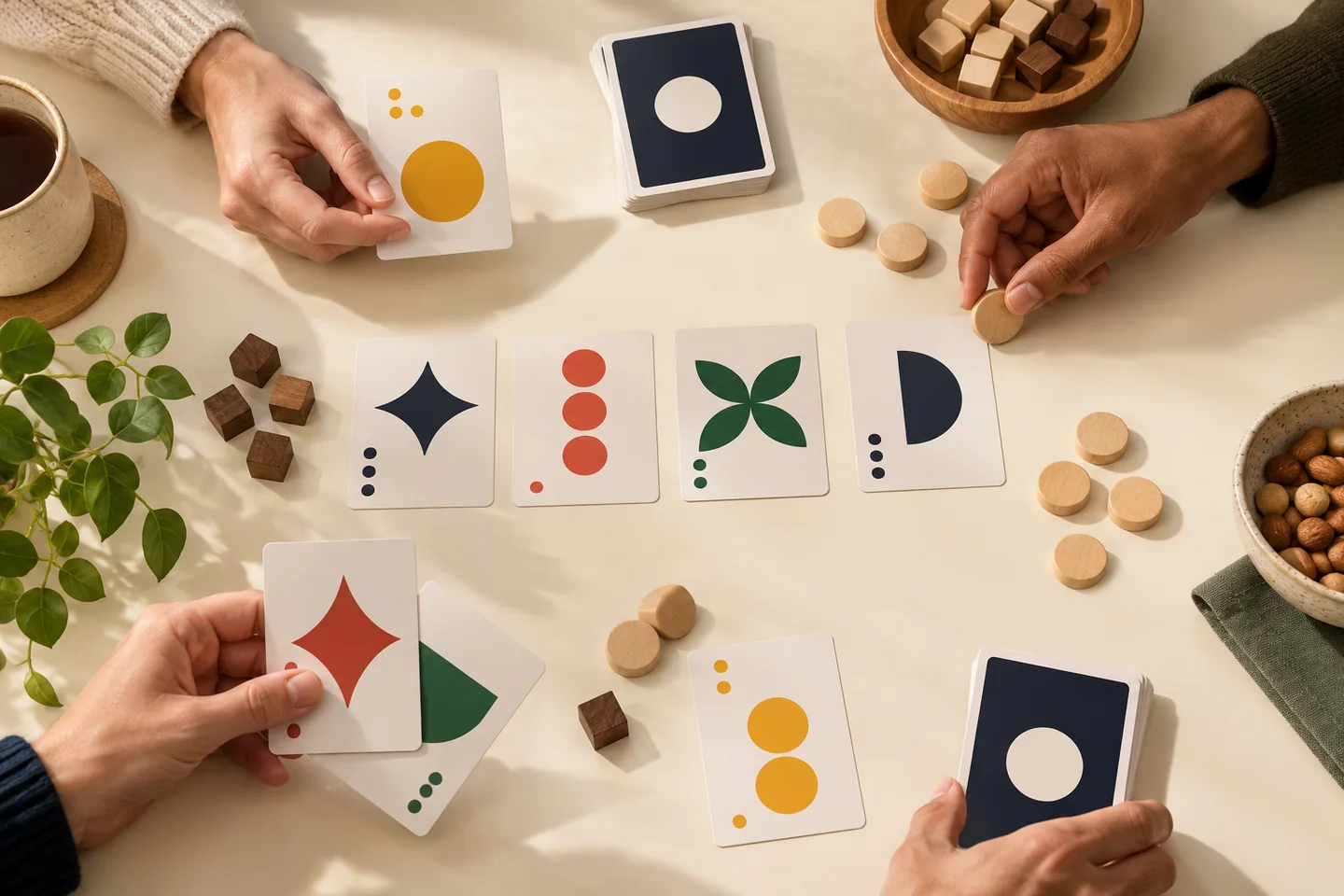
Turn and round
are different scales.
A turn is usually one player’s opportunity to act. A round commonly groups several turns or phases into a larger cycle. The exact boundary is defined by the game.
When teaching, point out both: “Your turn ends here; the round ends after everyone has taken a turn.” Check that the statement matches the actual rules.
A familiar word
can have a special job.
“Hand” often means cards held by a player, but a rulebook can use it in a particular way. “Action” might refer to one choice, a limited resource or a whole phase.
If the word seems inconsistent, look for the game’s glossary or illustrated example. You do not need to guess from everyday language alone.